Aging is a natural part of life, yet scientists continue to explore what causes our bodies to grow older at the cellular level. One of the most fascinating discoveries in this field revolves around telomeres — the tiny protective caps located at the ends of our chromosomes. These telomeres play a critical role in maintaining the stability of our genetic material and in determining how our cells age, divide, and function over time. When we ask, “What are telomeres and how do they relate to aging?” the answer lies in understanding how these small structures influence cellular lifespan. Understanding telomeres not only deepens our knowledge of the biological mechanisms behind aging but also offers valuable insight into how lifestyle, environment, and genetics interact to influence longevity. Research into telomeres continues to reveal potential pathways for promoting healthier aging, preventing disease, and possibly extending the human lifespan.
What Are Telomeres?
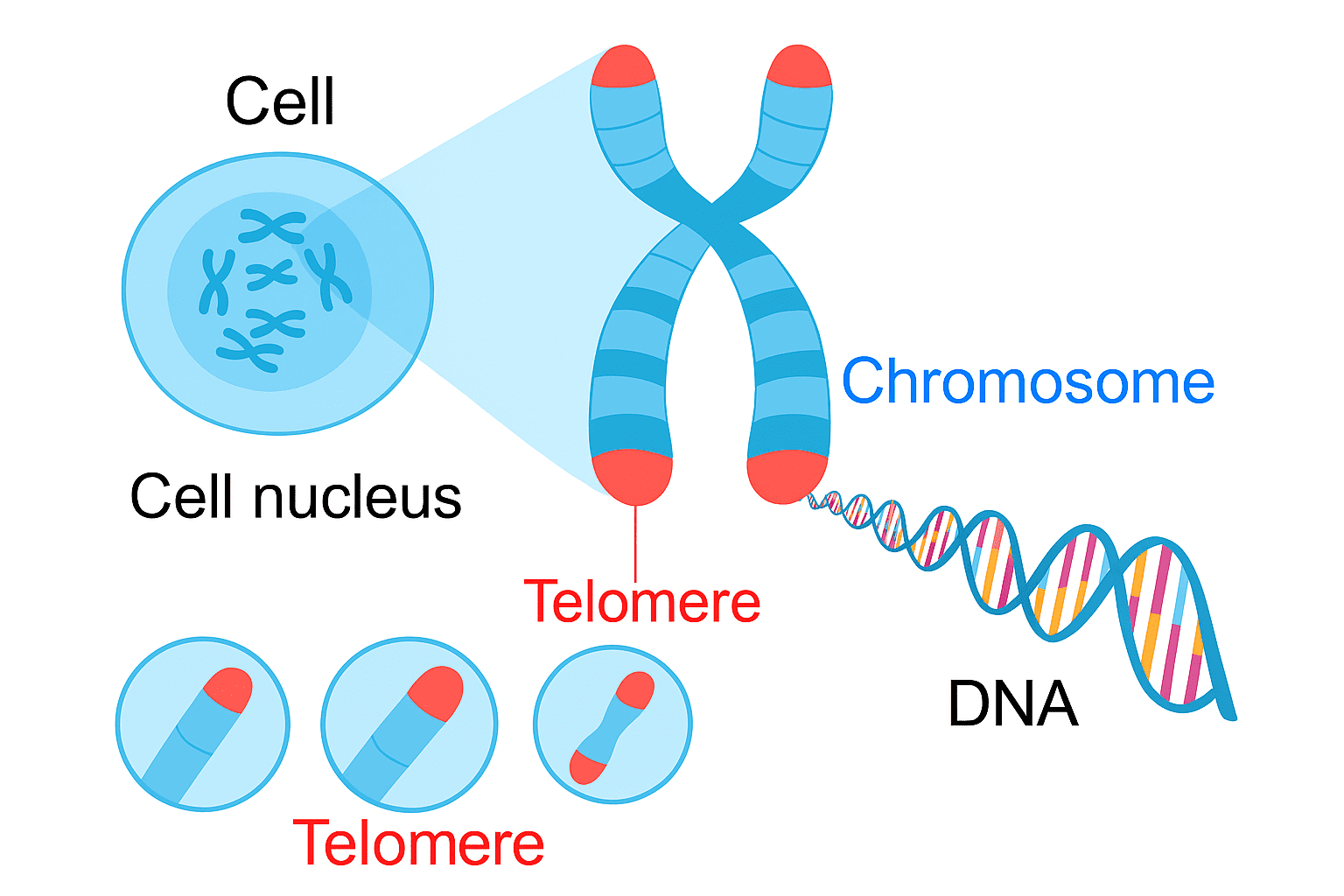
Telomeres are repetitive DNA sequences located at the ends of chromosomes. You can think of them like the plastic tips at the ends of shoelaces, they prevent the chromosome from fraying or sticking to others. Each time a cell divides, its DNA must be copied, but this process isn’t perfect. A small portion of the telomere is lost during every division.
Over time, as cells continue to divide, telomeres become progressively shorter. When they reach a critically short length, the cell can no longer divide properly and either becomes inactive (senescent) or dies (apoptosis). This shortening process acts as a kind of “molecular clock,” helping to determine the lifespan of a cell.
The Connection Between Telomeres and Aging
Telomere shortening is one of the most important biological indicators of aging. Every time a cell divides, its telomeres become slightly shorter. Over decades, this gradual shortening weakens the cell’s ability to reproduce and maintain healthy function. Once telomeres reach a critically short length, cells enter a state called senescence, where they no longer divide but continue to exist in a damaged, inactive form. These senescent cells release inflammatory substances and interfere with normal tissue activity, accelerating the aging process throughout the body.
This cellular decline manifests in many visible and invisible ways. On the surface, it appears as wrinkles, thinning hair, and slower wound healing. Inside the body, it means reduced organ efficiency, weaker immune defense, and a higher risk of chronic illnesses such as heart disease, diabetes, neurodegenerative conditions, and certain types of cancer. Tissues that rely on rapid cell turnover — like skin, the lining of the gut, or blood vessels — are especially sensitive to telomere shortening, making them more prone to age-related wear and disease.
The relationship between telomeres and aging also helps explain why people age at different rates. Two individuals may share the same chronological age — the number of years they’ve lived but have vastly different biological ages, depending on the health and length of their telomeres. Factors like chronic stress, poor diet, pollution exposure, and lack of sleep can cause telomeres to shorten faster, while a balanced lifestyle with good nutrition, exercise, and mental well-being can help preserve them. In essence, telomere length acts as a mirror reflecting the overall condition of our cellular health. The slower our telomeres shorten, the longer our cells remain functional and resilient — shaping not just how long we live, but how well we live.
What the Science Says
Scientists have spent decades studying telomeres to understand their influence on aging and disease. Here are some key scientific insights:
- Telomerase and Cellular Longevity:
In the 1980s, scientists Elizabeth Blackburn, Carol Greider, and Jack Szostak discovered an enzyme called telomerase. This enzyme helps rebuild and extend telomeres, allowing cells to divide more times than they normally would. They received the Nobel Prize in Physiology or Medicine in 2009 for this discovery. However, while telomerase can delay telomere shortening, excessive activity of this enzyme can also promote uncontrolled cell growth — a hallmark of cancer. Thus, the body must carefully balance telomerase activity.
- Lifestyle and Telomere Length:
Research has shown that lifestyle factors significantly influence telomere health. Chronic stress, poor diet, smoking, and lack of exercise can accelerate telomere shortening. On the other hand, healthy habits such as regular physical activity, a plant-rich diet, good sleep, and stress management have been linked to longer telomeres and slower biological aging. For example, studies from the University of California, San Francisco (UCSF) found that individuals who practiced meditation and maintained supportive social relationships tended to have longer telomeres than those with high stress and isolation.
- Telomeres and Disease:
Shortened telomeres are connected to many age-related diseases. Cardiovascular disease, Alzheimer’s, diabetes, and some cancers are all associated with shorter telomere length. Scientists are exploring whether maintaining telomere length could reduce disease risk or improve healthspan — the years of life spent in good health. - Emerging Therapies:
Experimental therapies are being studied to preserve or extend telomere length. Some focus on activating telomerase in a controlled way, while others use antioxidants or lifestyle-based interventions to reduce telomere damage. While these approaches are still in early stages, they hold promise for the future of anti-aging medicine.
Can We Slow Down Telomere Shortening?
While no method can halt telomere erosion completely, many strategies have been shown to preserve telomere length, support cellular repair, and promote a longer, healthier life.
1. Eat a Nutrient-Rich, Anti-Inflammatory Diet
Diet plays a powerful role in protecting telomeres. Foods rich in antioxidants, vitamins, and healthy fats help combat oxidative stress. These are one of the main causes of telomere damage. Fresh fruits and vegetables, whole grains, nuts, legumes, olive oil, and fatty fish (like salmon or sardines) provide nutrients that reduce inflammation and support DNA stability. Diets such as the Mediterranean or plant-based diet are strongly linked to longer telomeres and better cellular health. On the other hand, processed foods, refined sugars, and trans fats accelerate oxidative stress and inflammation, leading to faster telomere shortening.
2. Exercise Regularly and Consistently
Moderate physical activity is one of the most effective natural ways to preserve telomeres. Studies have shown that people who exercise regularly — particularly through aerobic or endurance activities like walking, cycling, swimming, or jogging — tend to have longer telomeres than sedentary individuals. Exercise enhances blood circulation, reduces inflammation, and improves mitochondrial efficiency (the energy powerhouses of cells), all of which help protect telomere structure. The key is consistency: even moderate activity performed regularly can make a measurable difference.
3. Manage and Reduce Stress
Chronic stress is one of the strongest accelerators of telomere shortening. Elevated levels of cortisol and other stress hormones cause oxidative damage and inflammation that weaken telomeres over time. Research has found that individuals exposed to long-term psychological stress — such as caregivers, people with high-pressure jobs, or those experiencing social isolation — often show significantly shorter telomeres. Incorporating relaxation techniques like mindfulness meditation, yoga, deep breathing, journaling, or spending time in nature can lower stress responses and support telomere maintenance.
4. Prioritize Quality Sleep
Sleep is when the body repairs itself at the cellular level. Poor or insufficient sleep disrupts hormonal balance, increases inflammation, and accelerates biological aging. Studies indicate that adults who regularly get less than six hours of sleep per night tend to have shorter telomeres. To support healthy cell renewal, aim for seven to eight hours of restful sleep in a dark, quiet environment. Maintaining a consistent sleep schedule and limiting screen time before bed can further improve sleep quality.
5. Avoid Smoking and Excessive Alcohol Consumption
Both smoking and heavy alcohol use cause severe oxidative stress, damaging DNA and speeding up telomere erosion. Smoking reduces oxygen supply to tissues and introduces harmful free radicals that attack cell membranes and genetic material. Likewise, excessive drinking increases inflammation in the liver and other organs, impairing telomere repair mechanisms. Quitting smoking and limiting alcohol to moderate levels (or avoiding it entirely) can significantly improve cellular health and longevity.
6. Build Supportive Relationships and a Positive Mindset
Emerging studies also highlight the importance of social and emotional well-being in telomere preservation. Strong social connections, emotional stability, and a sense of purpose are linked with lower stress hormone levels and longer telomeres. In contrast, loneliness, chronic anxiety, and negative emotional states are associated with faster biological aging. Maintaining meaningful relationships and cultivating gratitude or optimism can, therefore, be seen as forms of “cellular nourishment.”
Conclusion
Telomeres are tiny but powerful structures that hold big secrets about how and why we age. They act as a biological clock that measures our cells’ lifespan, influencing our health and longevity. Although telomere shortening is a natural process, science shows that our lifestyle choices can significantly impact how fast this clock ticks. The study of telomeres reminds us that aging isn’t just about genetics, it’s deeply connected to how we live, eat, move, and manage stress. By adopting healthy habits and maintaining balance in life, we can not only protect our telomeres but also enhance our overall quality of life and well-being.