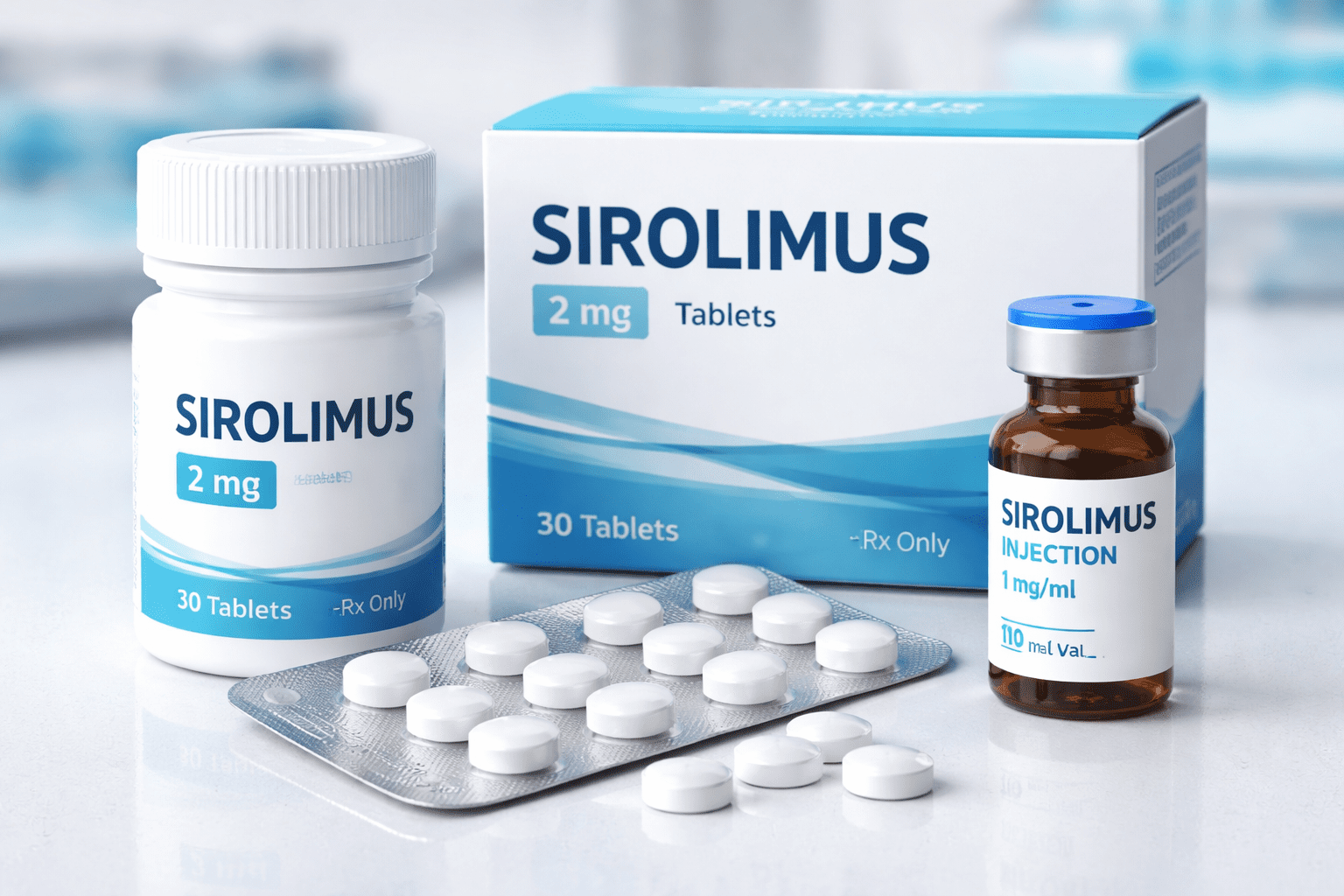
What Is Sirolimus?
Sirolimus is a prescription medication that alters the immune system and cellular growth processes. It was first isolated in the 1970s from a bacterium called Streptomyces hygroscopicus, which was found in soil samples collected on Rapa Nui. The drug works mainly by inhibiting a key cellular pathway known as the mechanistic target of rapamycin, commonly abbreviated as mTOR. This pathway controls many important biological processes, including:
- Cell growth
- Protein synthesis
- Metabolism
- Immune cell activation
- Aging-related cellular processes
How Sirolimus Works in the Body
Sirolimus works by inhibiting a cellular signaling pathway known as the mechanistic target of rapamycin (mTOR) pathway, particularly a protein complex called mTORC1. After entering the body, sirolimus binds to a cellular protein called FKBP12. This binding forms a complex that blocks the activity of mTOR, a key regulator of cell growth and division. By inhibiting this pathway, sirolimus prevents cells from progressing through the normal cell cycle, which slows down cellular growth and proliferation. This effect is especially important in immune cells known as T-cells, which are responsible for attacking foreign tissues such as transplanted organs. By suppressing the activation and multiplication of these immune cells, sirolimus helps prevent organ rejection. In addition to controlling immune responses, the inhibition of the mTOR pathway also influences metabolism, protein synthesis, and biological processes related to aging and cellular maintenance.
Uses of Sirolimus
1. Preventing Organ Transplant Rejection
One of the most important and widely recognized uses of Sirolimus is preventing organ rejection after transplantation, especially following a Kidney Transplant. When a person receives a transplanted organ, the immune system naturally identifies the new organ as foreign tissue and attempts to attack and destroy it. This immune response is known as transplant rejection and can lead to serious complications or failure of the transplanted organ. Sirolimus works by suppressing the immune system and preventing immune cells from multiplying and attacking the transplanted organ. By slowing down immune activity, the medication helps the body accept and maintain the new organ for a longer period. In many transplant treatments, sirolimus is prescribed together with other immunosuppressant medications to create a balanced therapy that reduces rejection risk while maintaining necessary immune protection. Doctors carefully monitor patients receiving sirolimus to ensure the drug maintains the right level of immune suppression without causing excessive vulnerability to infections.
2. Treatment of Lymphangioleiomyomatosis (LAM)
Sirolimus is also approved for the treatment of Lymphangioleiomyomatosis, often abbreviated as LAM. This is a rare and progressive lung disease that primarily affects women, usually during their reproductive years. In this condition, abnormal smooth-muscle-like cells begin to grow uncontrollably in the lungs, lymphatic system, and sometimes the kidneys. Over time, this abnormal cell growth can damage lung tissue, form cysts, and lead to breathing difficulties or reduced lung function. Research has shown that the abnormal cells involved in LAM rely heavily on the mechanistic target of rapamycin (mTOR) signaling pathway for their growth and survival. Because sirolimus blocks this pathway, it can slow down the abnormal cell proliferation associated with the disease. Clinical studies have demonstrated that sirolimus may stabilize lung function, reduce symptoms, and improve the quality of life for many patients living with LAM.
3. Use in Drug‑Eluting Stents in Cardiology
Another important medical use of sirolimus is in cardiology, particularly in specialized devices known as Drug‑Eluting Stents. These stents are tiny mesh tubes that doctors place inside narrowed or blocked coronary arteries during procedures such as angioplasty to help restore normal blood flow to the heart. In some cases, after a stent is placed, the artery may gradually narrow again due to excessive tissue growth inside the vessel, a process known as restenosis. Drug-eluting stents are designed to slowly release medications like sirolimus over time to prevent this excessive tissue growth. The drug inhibits cell proliferation in the artery wall, helping keep the blood vessel open and reducing the risk of future blockages. This technology has significantly improved long-term outcomes for many patients undergoing coronary artery treatments.
4. Emerging Research in Aging and Longevity
In addition to its established medical uses, sirolimus has become an important subject of research in the field of aging and longevity science. Scientists studying the biology of aging are particularly interested in the drug because of its ability to inhibit the mechanistic target of rapamycin (mTOR) pathway, which plays a major role in regulating cell growth, metabolism, and aging processes. Researchers such as David Sinclair and other longevity scientists have studied how inhibiting mTOR may influence lifespan and cellular health. Experiments in laboratory organisms including yeast, worms, flies, and mice have shown that drugs affecting the mTOR pathway can extend lifespan and improve certain markers of health. These findings have generated significant interest in the potential role of sirolimus in age-related diseases and healthy aging. However, despite promising early research, sirolimus is not currently approved as an anti-aging therapy, and scientists continue to study its long-term safety, optimal dosing, and potential risks before it can be considered for widespread use in longevity medicine.
Common Side Effects of Sirolimus
- Mouth ulcers or mouth sores
- Headache
- Nausea
- Diarrhea
- Constipation
- Stomach pain or abdominal discomfort
- Acne or skin rash
- Dry skin
- Joint pain
- Muscle pain
- Swelling of hands, feet, or ankles
- Fatigue or tiredness
- Fever
- Increased cholesterol levels
- Increased triglyceride levels
- High blood pressure
- Mild anemia
- Low platelet count
- Back pain
- Insomnia or trouble sleeping
- Loss of appetite
- Mild dizziness
- Cough
- Nasal congestion or cold-like symptoms
Serious Side Effects of Sirolimus
- Severe infections due to immune system suppression
- Pneumonia
- Sepsis (life-threatening infection in the bloodstream)
- Lung inflammation (interstitial lung disease)
- Severe allergic reactions
- Swelling of the face, throat, or tongue (angioedema)
- Kidney damage or kidney dysfunction
- Liver toxicity or liver damage
- Very high cholesterol or triglyceride levels
- Blood clot formation
- Delayed wound healing after surgery
- Increased risk of certain cancers (such as lymphoma or skin cancer)
- Severe anemia
- Severe thrombocytopenia (dangerously low platelets)
- Severe leukopenia (very low white blood cells)
- Internal bleeding
- Persistent high blood pressure
- Severe fluid retention (edema)
- Protein leakage in urine (proteinuria)
- Serious lung complications
- Severe gastrointestinal bleeding
- Pancreatitis (inflammation of the pancreas)
- Severe skin reactions or infections
Conclusion
Beyond its current medical applications, sirolimus has attracted growing interest from scientists studying aging, metabolism, and cellular biology. Because the mTOR pathway influences many fundamental biological processes, ongoing research may reveal additional therapeutic uses in the future. While much remains to be discovered, sirolimus continues to play an important role in medicine and represents a significant example of how understanding cellular pathways can lead to innovative treatments for complex diseases.